Your Firewall Isn't Enough: The Hidden Risk of Unmanaged VMs
Forgotten virtual machines, unpatched servers, and excessive access permissions can create security blind spots across IT infrastructure. ISPsystem explains how centralized infrastructure management, access controls, and
Your Firewall Isn't Enough: The Hidden Risk of Unmanaged VMs
ISPsystem
- November 27, 2026
- 10:00 AM
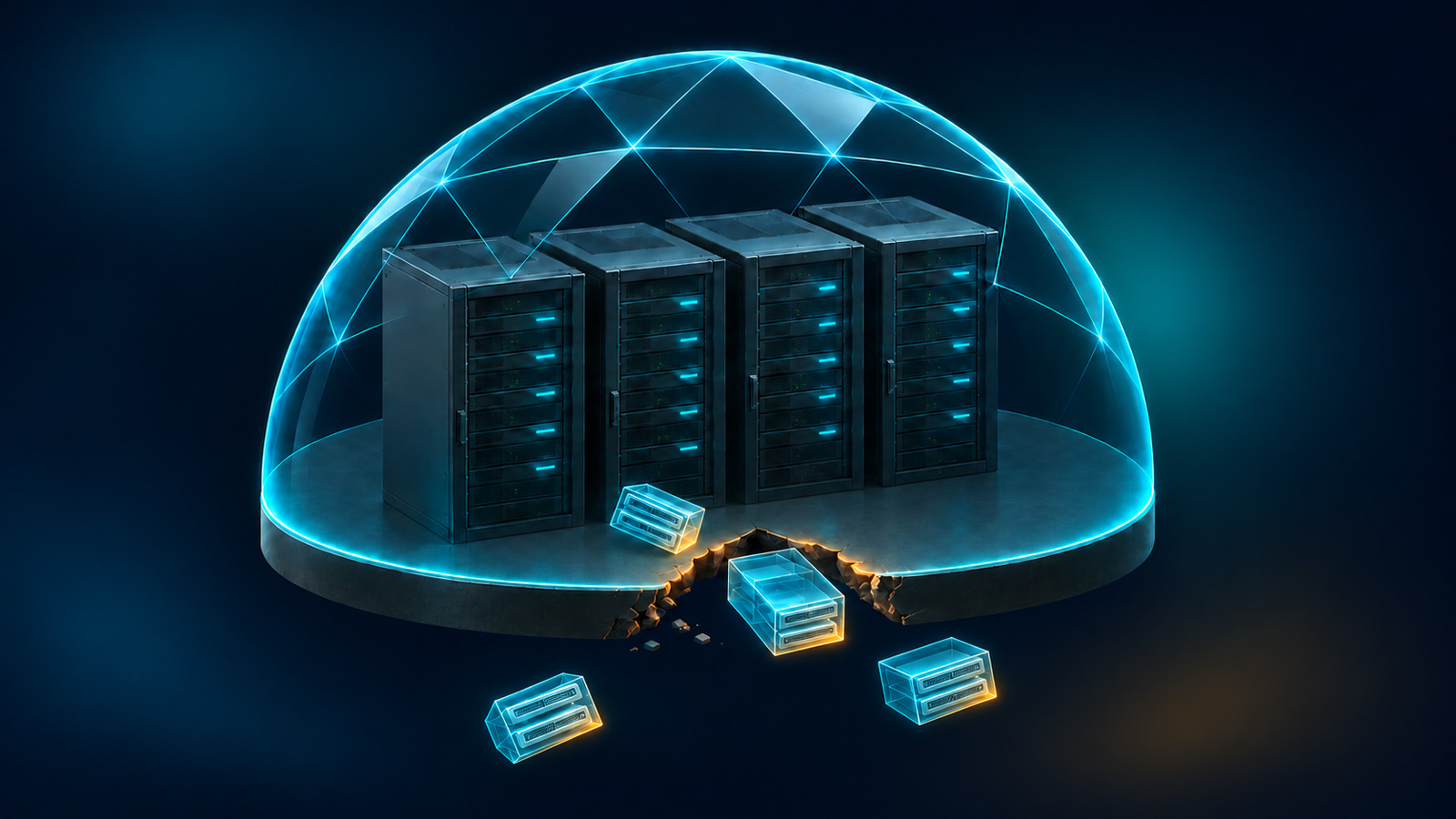
When discussing IT infrastructure security, the focus is usually on firewalls, EDR, backup, vulnerability management, and network segmentation. However, all of them are effective only under one condition — if the infrastructure itself is under control.
Incidents often begin not with the exploitation of a vulnerability or bypassing protection systems, but with shortcomings in basic infrastructure management. Every virtual machine, server, access, and IP address must have an owner, a lifetime, and a controlled path for creation and deletion.
When management processes are opaque, the infrastructure itself becomes a source of information security risks, and security tools have to operate over an unknown environment and merely contain the consequences.
This principle is equally critical for enterprise companies and service providers — regardless of whether the platform serves internal services, development teams, or external customers, a loss of control over administration can lead to the compromise of the entire environment.
Why Security Grows Out of Manageability
In modern IT infrastructure, hundreds of systems run on the same resources, and the environment itself is constantly changing — dozens of services are created, scaled, and deleted daily.
In such conditions, provisioning comes to the fore. Deploying a new virtual machine without a regulation and recording the owner leaves "forgotten" VMs in the environment. They do not receive updates, fall out of monitoring, and become an easy entry point for an attacker.
Centralized access management is no less critical. The platform must delineate the rights of users and administrators and record all operations; otherwise, excessive rights accumulate, allowing attackers to move laterally across the network.
We should not forget about the isolation of environments — the resources of different customers at a hosting provider, or internal systems, external services, and development environments in corporate IT infrastructure. If isolation is violated, an incident in the test environment can affect business-critical services.
All this is impossible without lifecycle control — linking capacity allocation to billing, quotas, and timely deletion of resources, so that outdated accounts and "abandoned" IP addresses do not remain in the network.
Finally, manageability is impossible without accurate accounting of the physical layer: the appearance, decommissioning, and movement of servers between racks and sites. Inaccurate accounting generates unaccounted servers and loss of control over security configurations.
Therefore, the foundation of information security is the transparency of resource management throughout their entire lifecycle.
Bring Virtualization and Infrastructure Management Under Control
ISPsystem brings VM management, physical infrastructure inventory, and resource lifecycle workflows together in one environment.
See how VMmanager, DCImanager, and BILLmanager help teams gain visibility and control across their IT infrastructure.
Explore ISPsystemMigration from VMware and the Change in the Management Model
Broadcom's change in licensing policy forced companies to reconsider their infrastructure strategies and look for alternatives to VMware — for example, considering Proxmox VE, OpenStack, and other open-source solutions. However, migrating to a new platform requires more than just the correct transfer of virtual machines.
Over the years of working with VMware, many have become accustomed to perceiving it as a single whole — virtualization, resource management, access, automation, and accounting.
When migrating to another stack, it quickly becomes clear that virtualization is not equal to infrastructure management: the hypervisor is just one element, and the remaining functions have to be assembled from several independent solutions.
Proxmox and OpenStack solve virtualization tasks on their own, but without additional software, they do not cover operational processes and control over the other layers of the environment. As a result, organizations have to independently integrate equipment management systems, resource accounting, access control, and inventory.
The more individual components in the infrastructure, the harder it is to maintain unified security policies — risks arise of losing a unified RBAC, end-to-end inventory, action auditing, and automation.
Therefore, it is important to view migration from VMware not just as a change of hypervisor, but as a revision of the entire infrastructure management model: if centralized control, automation, and lifecycle management are postponed for later, over time they become a source of new risks.
Which Processes a Management Platform Must Cover
After abandoning VMware, companies face the main question — how to rebuild infrastructure management.
When choosing a replacement, it is important to look not only at the capabilities of the hypervisor itself but also at what operational and security processes the chosen solution can cover and what additional integrations will be required.
At the foundation, there should be centralized management of the entire environment from a single interface and role-based access control (RBAC).
Equally important are the isolation of environments or customers, transparent resource accounting, and control of the entire lifecycle — from the creation of a virtual machine to its deletion and the revocation of access.
Also, the platform must manage the physical layer of servers and automate routine operations.
Such an architecture can be built in different ways: assembled from separate open-source tools and independently solving the issue of their integration, or by choosing a ready-made comprehensive solution.
Regardless of the approach, it is precisely the coverage of these processes that returns the infrastructure to the transparency and manageability that the VMware ecosystem previously provided.
How to Build a Unified Management Environment
To avoid assembling infrastructure management from disparate systems, all these processes can be combined within a single ISPsystem product stack.
In this architecture, VMmanager is responsible for virtualization, DCImanager for the physical level of the infrastructure, and BILLmanager acts as the end-to-end layer for resource provisioning, quotas, accounting, and FinOps.
VMmanager automates the lifecycle of virtual machines, including deployment with a preinstalled software stack, and scales up to 60,000 VMs and 700 nodes in a single environment.
Network isolation based on VxLAN supports more than 16 million isolated segments between geographically distributed sites, and a self-service portal is provided for users.
In parallel, DCImanager provides centralized management and full inventory of the physical layer in multi-vendor environments — from servers to switches and UPSs. The platform checks equipment health and disk S.M.A.R.T. data, configures BMC, performs secure drive wiping, automatically installs the OS, monitors hardware status, and controls warranty periods.
All three products integrate seamlessly with each other and work as a single environment, and if necessary, can interact with external solutions — for example, with OpenStack. BILLmanager acts as the end-to-end layer here: it links the provisioning of IT resources with authorization and accounting, allows assembling combined services, and implements showback and chargeback mechanisms.
The built-in BI module with customizable dashboards for analyzing resource utilization deserves special attention. In a corporate environment, it helps to find "abandoned" capacity in time, which development teams forget to delete after completing tasks — such servers do not sit idle without updates and control, and the company reduces hardware and license costs.
How Implementing a Unified Management Environment Affects IT Infrastructure Security
When the processes of managing virtualization, physical equipment, and the resource lifecycle are linked into a single environment, security ceases to be just a set of protective tools and becomes the result of systemic manageability.
Information security and operations teams get a transparent picture of the entire environment — from the physical server to the virtual machine, its owner, and the history of changes, which directly reduces the number of "blind spots."
Automation of provisioning, delineation of rights, and control over resource lifetimes reduce the risk of errors in issuing access, the appearance of unaccounted servers, and the retention of "forgotten" virtual machines. This also simplifies the migration from VMware itself: companies do not just replace the hypervisor, but build a transparent and manageable operating model.
As a result, infrastructure security relies not only on individual security tools but also on the management system itself, which makes the environment predictable, controllable, and resilient to risks.
Ready to build a transparent and secure infrastructure? Discover how ISPsystem can help you regain full control over your resources.
Sponsored and written by ISPsystem.
Originally published by BleepingComputer. Aggregated on AIWithGhost for educational purposes — full credit and traffic to the original publisher.