Inside an OPSEC Playbook: How Threat Actors Evade Detection
Threat actors are now publishing structured OPSEC playbooks to stay undetected. Flare reveals how these guides outline layered infrastructure, identity separation, and long-term evasion strategies. [...]
Inside an OPSEC Playbook: How Threat Actors Evade Detection
Flare
- April 28, 2026
- 08:50 AM

When cybercrime operations are disrupted, the cause is typically not due to sophisticated detection, but rather basic operational mistakes such as identity reuse, weak infrastructure separation, or overlooked metadata.
In a recent cybercrime forum post observed and analyzed by Flare researchers, a threat actor attempts to address these failures by outlining a structured OPSEC framework designed for "high-volume carding operations.” Instead of focusing on tools or monetization, the post focused entirely on how to stay undetected over time.
According to the actor, this framework is a “battle-tested methodology that has kept teams operational while others have been compromised.” The post reads less like a forum tip and more like an internal operations manual, complete with a three-tier architecture, a taxonomy of common mistakes, and contingency mechanisms borrowed from the intelligence tradecraft playbook.
While many of the techniques are not new, the way they are organized into a clear operational framework indicates a more methodical approach to sustaining large-scale activity.
For defenders, this offers a rare look into how cybercriminals are structuring long-term operational security.
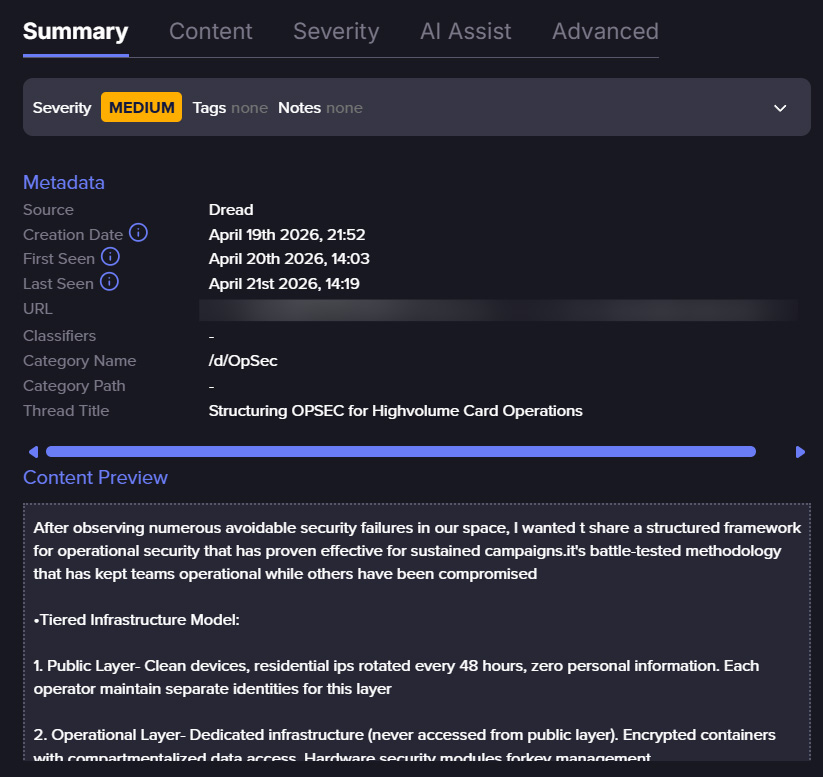
Flare link to post, sign up for the free trial to access if you aren’t already a customer
A Three-Tier OPSEC Architecture
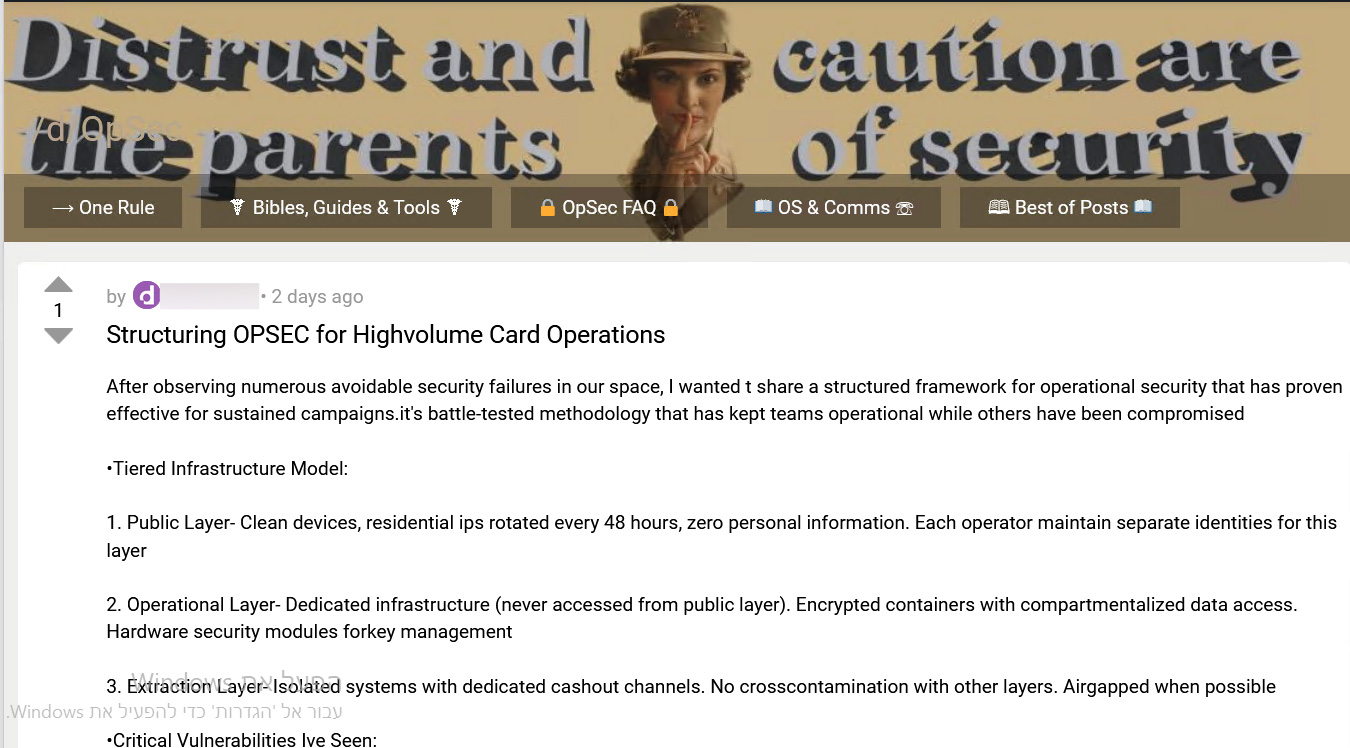
At the core of the actor’s methodology is a three-layer infrastructure model, designed to separate exposure, execution, and monetization.
Public Layer
The actor states that the public layer should consist of “clean devices, residential IPs rotated every 48 hours, zero personal information.” Each operator is also required to maintain separate identities.
This reflects a clear understanding of modern detection capabilities. Fraud prevention systems rely on identity correlation and behavioral tracking, making identity reuse a primary risk.
The use of residential IP rotation also aligns with real-world fraud campaigns, where actors increasingly rely on proxy networks to blend in with legitimate traffic.
Operational Layer
The operational layer is described as completely isolated from the public layer, with a strict rule: “never accessed from public layer.” According to the actor, this layer should include:
-
Encrypted containers with compartmentalized data
-
Dedicated infrastructure
-
Hardware-backed key management
The emphasis here is on compartmentalization: ensuring that a compromise in one part of the operation does not expose the entire infrastructure. This mirrors real-world cybercrime ecosystems. For example, modern ransomware groups such as LockBit operate using affiliate-based models, where different actors handle access, execution, and monetization separately to reduce risk exposure.
See What Threat Actors Are Planning Before They Strike
Structured OPSEC frameworks mean sophisticated threat actors are staying hidden longer.
Flare monitors cybercrime forums, dark web communities, and Telegram channels—giving your team early warning before attacks reach your environment.
Keep up with threat actors for freeExtraction Layer
The final layer focuses on monetization. The actor specifies that this layer must be “isolated systems with dedicated cashout channels” and, when possible, “airgapped.” The actor also emphasizes “no cross-contamination with other layers”.
This reflects a critical understanding: financial transactions are often the point where investigations succeed. By isolating cashout infrastructure, actors attempt to break the forensic chain between fraud activity and monetization.
The Mistakes That Still Lead to Exposure
The actor identifies several recurring failures that continue to expose cybercriminal operations.
Identity Reuse
The reuse of burner accounts is highlighted as a major security risk. According to the threat actor, this is one of the most common operational failures. In practice, this aligns with numerous investigations where law enforcement successfully linked actors through cross-platform identity reuse.
Weak Fingerprinting Evasion
The actor criticizes “inadequate digital fingerprinting countermeasures.” This reflects the growing importance of device fingerprinting in fraud detection. Modern systems analyze:
-
Browser and device characteristics
-
Session behavior
-
Interaction patterns
The actor’s dismissive tone toward basic OPSEC suggests that VPN-only anonymization is no longer considered sufficient even within underground communities.
Poor Separation Between Stages
The threat actor calls out “insufficient separation between acquisition and cashout operations.”
When the same infrastructure is used across multiple stages, defenders can more easily trace activity across the attack chain. According to the actor, strict separation is necessary to maintain operational longevity.
Metadata Exposure
The actor also highlights “poor metadata management on operational materials.”
This is a subtle but important risk. Metadata embedded in files, such as timestamps or device identifiers, has been used in multiple real-world cases to identify threat actors.
Advanced Techniques for Resilience
Beyond basic hygiene, the actor outlines several advanced techniques designed to improve operational durability.
-
Time-delayed triggers: According to the actor, implementing “time-delayed operational triggers” can reduce correlation between actions and infrastructure. This technique is commonly observed in malware campaigns, where delayed execution complicates forensic timelines and makes it more difficult to link cause and effect.
-
Behavioral randomization: The actor recommends “behavioral pattern randomization” to evade detection. This directly targets behavioral analytics systems, which are widely used in fraud prevention. By mimicking legitimate user activity, attackers attempt to bypass automated detection mechanisms.
-
Distributed verification: The mention of “distributed verification protocols” suggests multi-step validation across systems or operators, reducing reliance on single points of failure.
-
Dead man’s switches: The actor proposes “dead man’s switches for critical data.” These mechanisms can automatically delete or disable sensitive data if certain conditions are met, indicating a focus not only on avoiding detection but also on limiting damage when things go wrong.
Key TTPs Identified from the Actor’s Framework
Based on the actor’s conclusions, several clear TTPs emerge:
-
Infrastructure segmentation to limit blast radius
-
Identity compartmentalization across platforms and layers
-
Use of residential proxies and anti-fingerprinting techniques to defeat behavioral analytics
-
Strict separation of operational stages, including access, execution, and monetization
-
Behavioral evasion through randomization of user patterns
-
Resilience mechanisms such as dead man’s switches and time-delayed triggers
These techniques are not theoretical. They align with methods observed in other cybercrime operations.
OPSEC as a Competitive Advantage
One of the most revealing aspects of the article is how the actor frames operational security. According to the actor, “If you're still using VPNs as your primary security measure, you need to level up.”
The focus is not on how to carry out fraud, but on how to stay operational over time. The strict separation between layers, enforced compartmentalization, and built-in contingency mechanisms all point to a clear priority: avoiding disruption.
This suggests that OPSEC is no longer just a precaution, it is becoming a competitive filter within the cybercrime ecosystem. Actors who rely on basic protections are more likely to be exposed early, while those adopting structured models can operate longer and at scale.
The framework is not introducing new techniques, but it formalizes them. And as more actors adopt similar approaches, maintaining access may shift from technical capability to who can stay hidden the longest.
What Defenders Can Do
Although the original post is aimed at threat actors, it provides valuable defensive insights for security teams.
-
Invest in understanding cross-platform correlation: The emphasis on avoiding identity reuse highlights the importance of cross-platform and cross-session correlation. Defenders should focus on linking activity across accounts, devices, and behavioral patterns.
-
Evolve behavioral detection: The actor’s focus on fingerprinting and randomization underscores the need for advanced behavioral analytics rather than reliance on static indicators.
-
Monitor the entire attack chain: The strict separation between stages means defenders must connect signals across different phases, from initial access to monetization.
-
Leverage metadata: Metadata remains an underutilized but powerful investigative tool. Proper analysis can reveal hidden links between operations.
-
Prepare for resilient adversaries: The use of contingency mechanisms suggests that attackers are planning for disruption. Defensive strategies must therefore emphasize resilience and adaptability, not just prevention.
The forum post sheds light on how some threat actors are prioritizing operational longevity over short-term access. According to the actor, failures don’t come from lack of tools, but from poor discipline: identity reuse, weak separation, and operational mistakes.
For defenders, this shifts the challenge. As attackers focus on longevity, detection must move beyond isolated indicators and instead connect behavior, identities, and infrastructure over time.
Learn more by signing up for our free trial.
Sponsored and written by Flare.
Originally published by BleepingComputer. Aggregated on AIWithGhost for educational purposes — full credit and traffic to the original publisher.